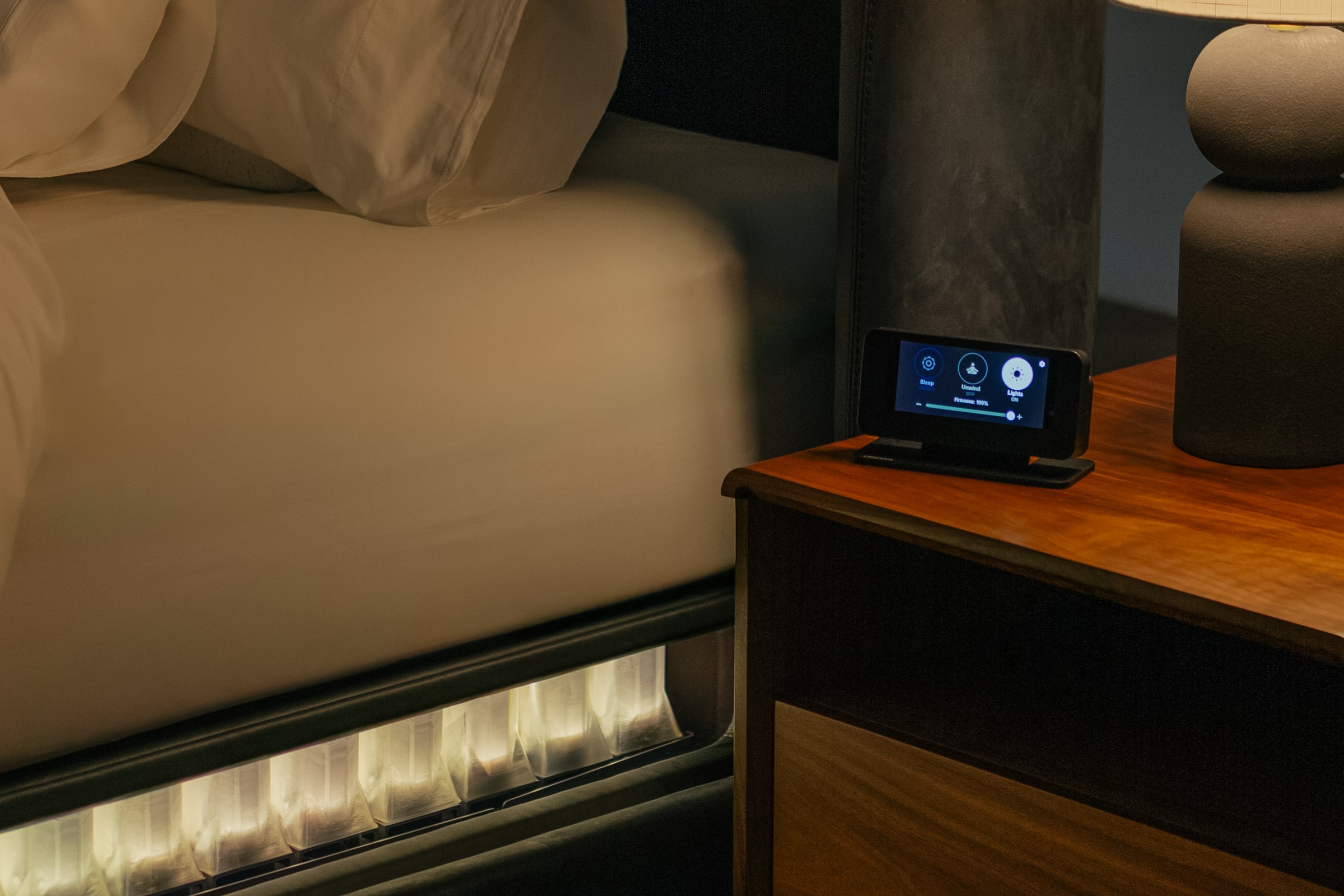
Sleep moves through four stages each night: light sleep, deep sleep, REM sleep, and brief wakefulness. Each stage does different work for the body and brain, and a person cycles through all four several times a night. Ciridian's Playback feature lets a sleeper see which stage they were in and which position they held, matched to how the springs responded.
Sleep stages explained simply: the night is not one continuous state but a cycle of four stages, repeating roughly every ninety minutes. Light sleep, deep sleep, REM sleep, and brief periods of wakefulness each carry out different work for the body and brain, and a person moves through the full cycle four to six times before morning. Understanding what happens in each stage explains why some nights feel restorative and others do not, and why position and movement matter as much as total hours slept.
The stages of sleep fall into two broad categories: non-REM and REM. Non-REM sleep is further divided into light sleep and deep sleep, and REM sleep is the stage most associated with dreaming. A sleeper also passes through brief moments of wakefulness, often too short to remember, as the body shifts between stages. Each full cycle moves from light sleep down into deep sleep and back up through light sleep into REM, then begins again.

Light sleep is the entry point into the night and the stage a sleeper returns to between deeper cycles. Breathing and heart rate slow, muscles relax, and the body begins to disengage from the day, though a person can still be woken easily. Light sleep makes up the largest portion of total sleep time. It is also the stage where small movements are most common, as the body adjusts position before settling into deeper stages.
Deep sleep is the stage in which the body does its most physically restorative work. Heart rate and breathing reach their slowest and steadiest points, muscles are fully relaxed, and the body directs energy toward tissue repair and physical recovery. Deep sleep is concentrated in the earlier part of the night, with each cycle typically holding less of it as the night goes on. It is also the stage from which a person is hardest to wake, and one that pressure and discomfort can interrupt without the sleeper fully realizing why.
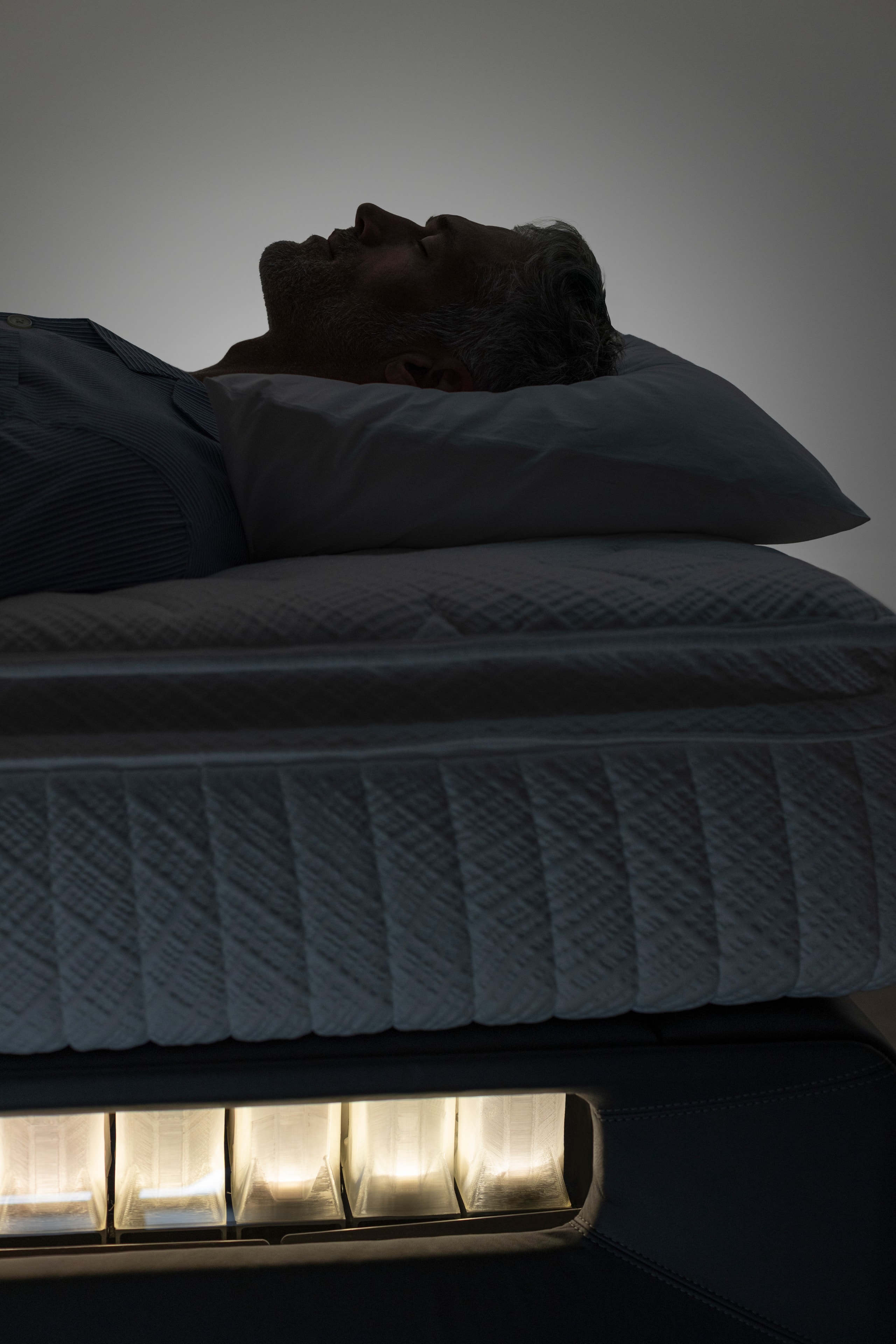
REM sleep, short for rapid eye movement, is the stage most associated with dreaming and with processing the day mentally. Brain activity rises to levels close to wakefulness, the eyes move rapidly beneath closed lids, and the major muscles of the body become temporarily still, a natural mechanism that keeps a person from acting out dreams. REM periods grow longer as the night progresses, which is why the most vivid dreaming tends to happen closer to morning. Because the body is largely still during REM, undisturbed support matters here as much as during deep sleep.
Brief wakefulness is a normal part of every night, not a sign that something is wrong. The body surfaces briefly between cycles, often to shift position, and most of these moments are forgotten by morning. Frequent or prolonged wakefulness, however, can fragment the night and reduce the time spent in deep and REM sleep, which is where discomfort and pressure points tend to have the most effect. A Sleep System that reduces the need to wake and reposition supports longer, steadier stretches of both deep and REM sleep.
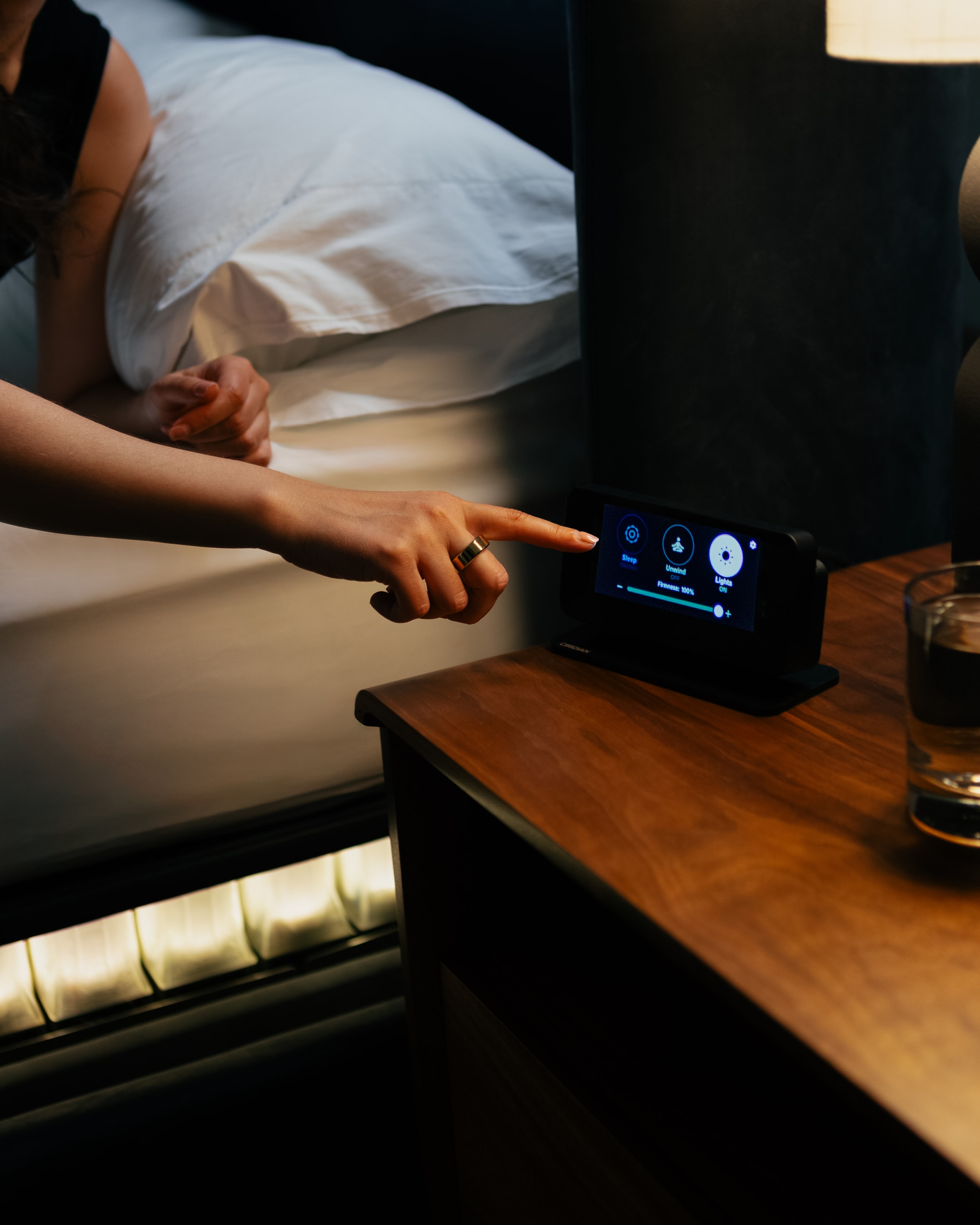
Position changes throughout the night, and most of that movement happens during lighter stages rather than deep or REM sleep. A sleeper who is comfortable tends to make fewer large movements and settles more quickly back into a stable position, which supports longer stretches of deep and REM sleep. A sleeper who is under pressure, whether from a shoulder pressed into a firm surface or a hip unsupported by a slack one, moves more often to find relief, and each of those movements risks pulling the body out of a deeper stage before it has finished its work.
Ciridian designs its Sleep System to respond to the body rather than ask the body to adjust to it. Up to four hundred Smart Springs are read independently and adjust their firmness in real time, so that pressure is met and released continuously rather than held in one place through the night. This is Intelligent Pressure Relief: a response that happens under the sleeper, without any switch to press or setting to choose.
What sets the system apart is the ability to see this happen. Playback™ records the night and lets a sleeper review it the next morning, showing which position they held, how long they held it, and how the springs responded beneath them. A sleeper can see the stretches of stillness that likely mark deeper sleep, and the periods of shifting that mark lighter stages, matched against the actual pressure map beneath their body. Over time, this turns a vague sense of sleeping well or poorly into something a person can actually see and understand.
Dual-zone cooling works alongside the springs, addressing the temperature swings that often accompany transitions between stages, particularly the shift into and out of REM sleep. The aim across the system is the same throughout: fewer disruptions, steadier stretches in each stage, and a night a sleeper can review rather than only guess at.
A visit to the showroom in Addison, Texas, is the clearest way to understand this in person. Appointments are private, and a visitor lies on the system and watches it map and relieve pressure directly, then sees how that same information appears in Playback. Ciridian™ builds each system by hand in Addison, and every purchase includes white-glove delivery, a guided tutorial, a ten-year warranty, and an annual visit to refresh materials and tune the system, so that the improvement a sleeper feels on the first night continues for years. There is time, at the end of a long day, simply to Unwind, and to trust that the system is doing its part while a sleeper does theirs.
See it in person. The Ciridian Sleep System is shown by private appointment at the showroom in Addison, Texas. Book a private appointment
There are four stages: light sleep, deep sleep, REM sleep, and brief wakefulness. Non-REM sleep includes both light and deep stages, while REM sleep is a distinct stage associated with dreaming. A person cycles through all four stages several times each night, roughly every ninety minutes.
Deep sleep and REM sleep each do essential but different work: deep sleep supports physical recovery, and REM sleep supports mental processing and dreaming. Neither is more important than the other, and both depend on light sleep and brief wakefulness happening normally in between.
Brief wakefulness between sleep cycles is normal and usually forgotten by morning. Frequent or prolonged waking, often triggered by discomfort or pressure, can fragment the night and reduce time spent in deep and REM sleep, which is where the most restorative work happens.
Playback™ records the night and lets a sleeper review it the next day, showing which position they held, for how long, and how the Smart Springs responded beneath them. It does not diagnose sleep stages directly, but it makes patterns of stillness and movement visible.